
by Rob Cope
1st March 2026
Rob Cope from Rewilding Leeds went along to this inaugural two-day conference of ideas covering gardening for nature, ourselves and the planet.
‘The potential for gardens to contribute space for nature is colossal. Nationally, gardens total 23 million, covering an area of around 433,000 hectares. This is one-fifth of the area of Wales, and bigger than the Exmoor, Dartmoor and Lake District National Parks and the Norfolk Broads put together. In England, the area of land under gardens is four and a half times larger than the area designated to National Nature Reserves.
The Wilding Gardens Conference examined why and how rewilding can lead to increased sustainability and biodiversity – from city gardens, parks, backyards and balconies, to country estates, churchyards and allotments, across the lawns, verges, plots and patios of our landscape.’ Wilding Gardens.
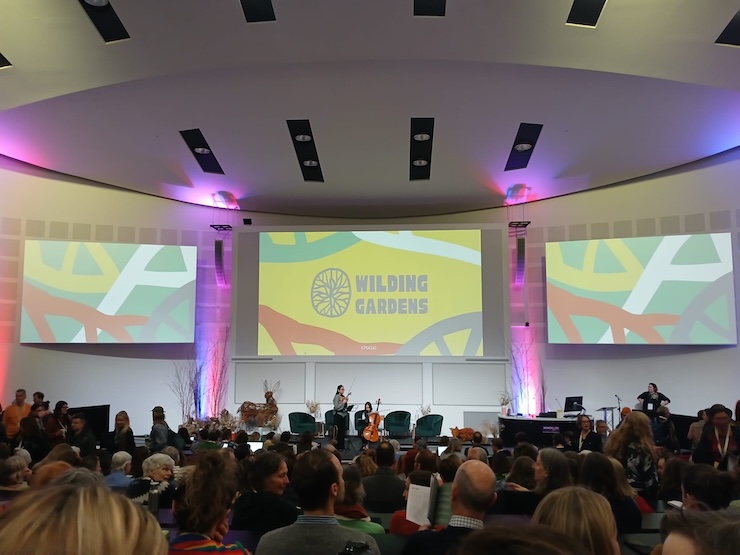
Five hundred people attended an amazing Wilding Gardens conference at Manchester University in January. The conference was organised by a not-for-profit company, set up by a team from the Knepp Estate, the high profile rewilding project in West Sussex. Their aim was to facilitate and support the ‘rethinking of the gardening mindset’.
Attendees came from all over the UK, and from further afield, but included a good number from Yorkshire, two of us from Rewilding Leeds and others who are involved with the Yorkshire Rewilding Network. The schedule of presenters, over two days, was extraordinary and provided a wealth of information and inspiration. I certainly came away with my head bursting from trying to process all that I had heard, not just from presenters but from networking with such a wide range of gardeners, landscape architects, ecologists and naturalists, as well as plenty of amateur enthusiasts like myself.
The aim of our group, Rewilding Leeds, is to encourage nature and biodiversity enhancement in an urban environment, so I was particularly looking for ideas and examples relating to the smaller scale. The conference certainly succeeded from this perspective.

Anna Gilchrist talked about her rewilding work with schools and Kate Bradbury explained how she had transformed her own garden, a recognisably small patch of green within a city. John Little gave a presentation about the value of brownfield sites, including gravel pits, railway lines and industrial wasteland, whilst Wendy Allen talked us through the use of rain gardens, planted depressions used to capture and absorb rainwater runoff (‘bioretention facilities’ is the technical term!).
For me, the most stimulating presentation was from Jason Williams, aka the Cloud Gardener. He was inspired, whilst furloughed during Covid, to grow plants on his 18th floor balcony and learned so much that he went on to support others to make their small-scale spaces greener and more wildlife friendly. Back yards, alleyways, window boxes, patios, terraces, roadside verges, etc. – they can all contribute to enhancing biodiversity in urban environments.
Many other presenters talked about how to adapt to climate change, how to move away from chemical inputs and how to grow food and garden plants in a more sustainable way. I was also inspired by those who described projects to create wildlife corridors, such an important concept if we are to help wildlife recover from decades of negative human activity. Libby Drew spoke about the Weald to Waves project in Sussex, aiming to connect over 1,000 gardens, 150 farms, parks, nature reserves and other green spaces, to create a 100 mile nature corridor that leads to the coast.
Steve Connor also described how the CyanLines project is hoping to create another 100-mile network, this time involving the linking of green (nature) and blue (water) spaces across Manchester, with support from the City Council and the Greater Manchester Combined Authority. There is a smaller project starting in Leeds this year, with more local ambitions, but it demonstrates the ideas that can come to fruition if the will is there, something that could be replicated in more and more places.
There was a lot else besides – hence the overfilled brain – but that hopefully provides a good taste of what was provided to, and hopefully absorbed by, such a large audience of people, many of whom can make a difference.
There is no doubt that the immediate audience for this conference was one that does not need a great deal of converting but we all learned so much and now need to use the information to inspire those who would not be able to go to such events, but who have the desire and the potential to make change. We will certainly use the experience and knowledge within Leeds, at whatever levels may be applicable – local garden to local authority – with the aim of informing, connecting and inspiring the many who really care.
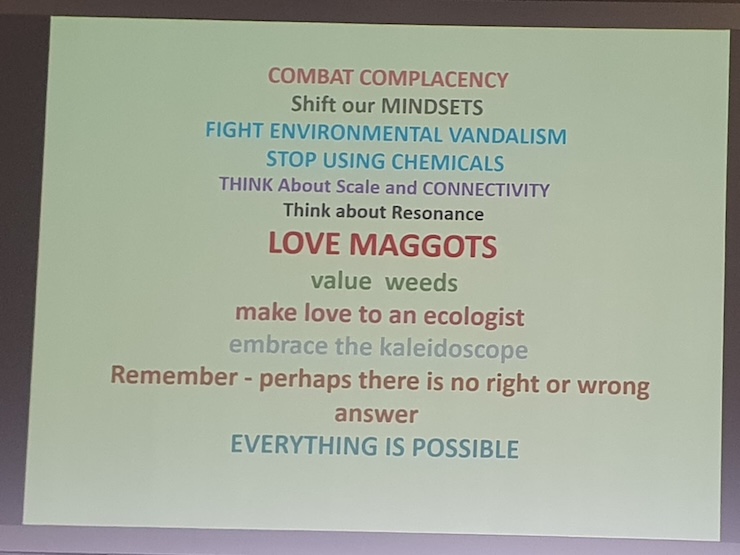
Useful information
Rob Cope is one of the founders of Rewilding Leeds, a group of volunteers that is aiming to support the increase of biodiversity and habitat creation across the city of Leeds. More details about the group can be found here: www.yorkshirerewildingnetwork.org.uk/local-rewilding-networks
If you are interested in rewilding, at whatever scale, and have queries about how to take some action or be involved in local projects in Leeds, please get in touch via: rewildingleeds@gmail.com
Wilding Gardens website (A full list of speakers is available on the website. The presentations were recorded and will be made available if you register your interest on the website).
[Image Credits: Rob Cope]