
Verity Bellamy
23rd September 2026
Inside seven years of rewilding a former Whitby farm – where thistles, barn owls and off-grid campers are all part of the plan.
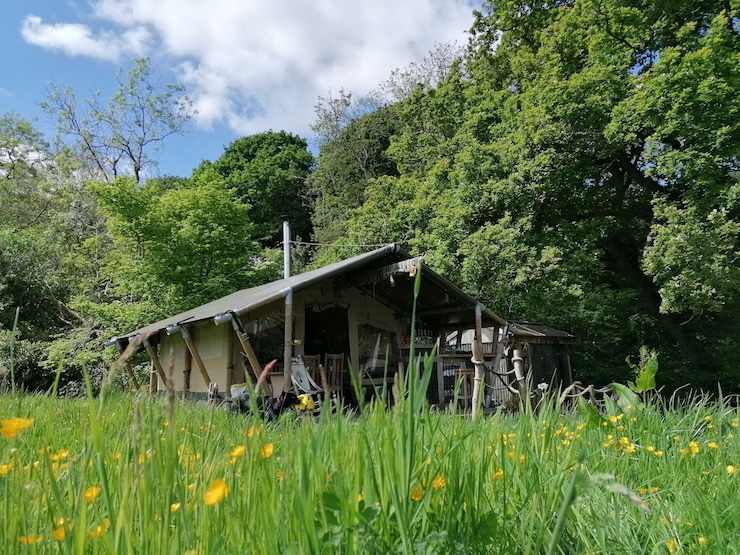
It’s midsummer in the fields, and the sun is still high as I sit out with a cold beer at the end of a busy day. We’re into year seven of rewilding our fields, and it’s very much been a year of the thistles – which seems to have delighted the butterflies, as I’ve never seen so many flitting between the thistle heads, as well as the vast charms of goldfinches who twitter noisily above my head.
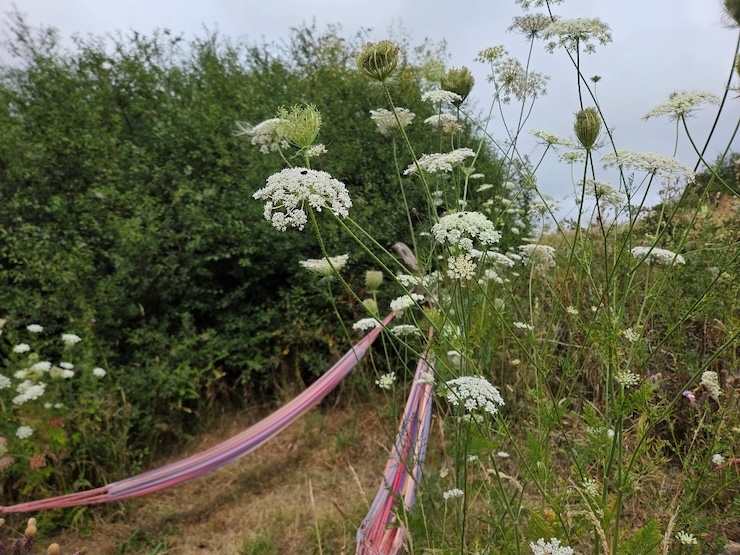
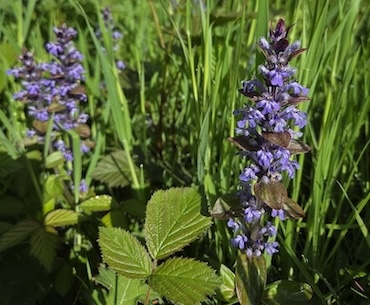
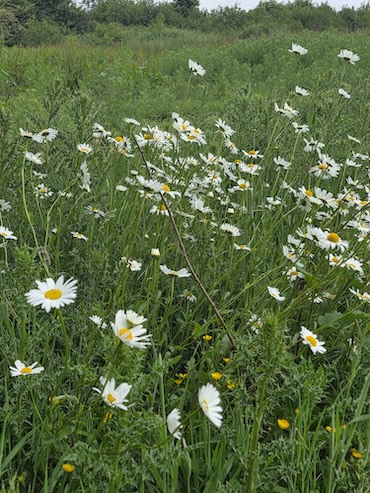
We’re taking deep breaths and embracing the years of the docks and the thistles as all part of the rewilding journey. The fields were sprayed and fertilised for many years, and we’re trusting that as the nitrogen levels drop and the compacted soil loosens other species will take back hold. In fact, in the corner of the steep field where the tractors could never get – always a pilot for what comes next in the rest of the fields – we’ve had an amazing year, with the umbellifers reappearing all at once as though they had always been here. Last year there was the odd sprig of cow parsley, and now there are clouds of wild carrot and hemlock. Down by the old beck that runs through the farm valerian has reappeared this year; alongside it blue spires of bugle were in abundance among the heady spires of meadowsweet. I’m overjoyed and astonished by each new addition – the plants seemingly appearing from nowhere to reestablish themselves back where they belong as if there had been no gap without them.
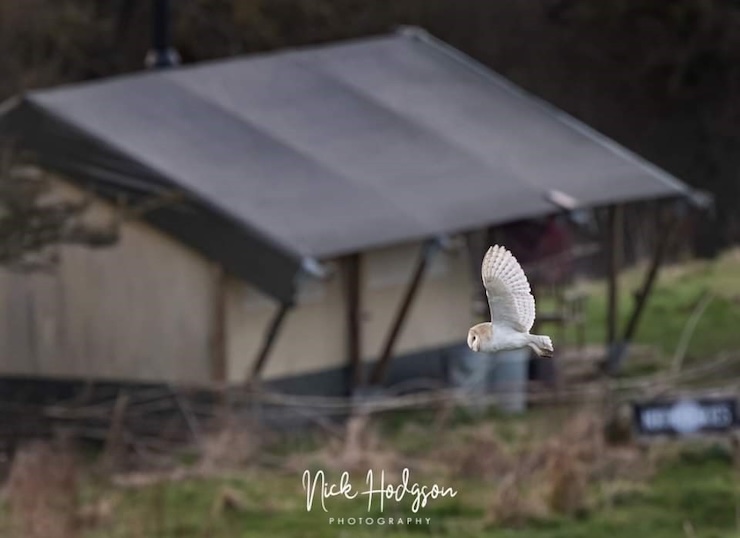
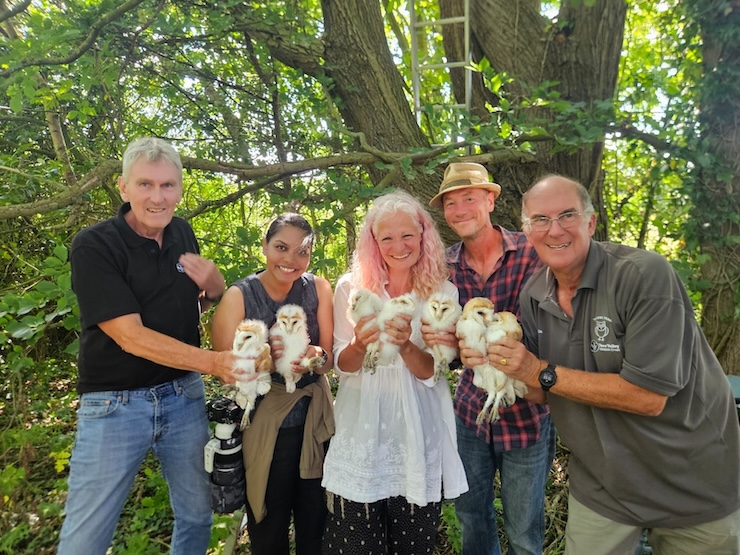
We haven’t cut the fields and they’re not being grazed – judge us as you will for that, we’re not professing to have all the answers as what to do for the best. But this has created a thatch in the grass as the old grass crop lies over and the new grass comes through – and this seems to be the ideal habitat for voles and mice, so much so that our resident barn owls successfully raised seven chicks to fledge this year! Our lovely ‘barn owl man’ Colin from the Cleveland Barn Owl Trust had only seen this many chicks three or four times in all the years he’s been ringing barn owls and attributes it to our rewilding scheme, so we’re currently feeling that we must be doing something right!
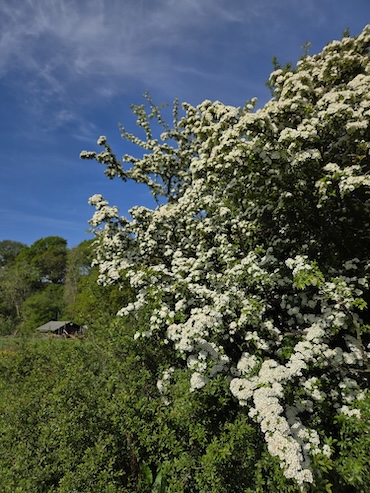
As well as rewilding we’ve also worked with Yorkshire Wildlife Trust to plant almost 2,000 trees on the site. We’ve replanted existing hedgerows, both on the borders of our land to create wildlife corridors, as well as across our fields to create a windbreak on our windy hillside. The former farmland slopes down to a tiny but perfect slice of ancient woodland and a beck that flows through it, full of wild garlic and bluebells, lush with ferns and shaded by giant old oaks. We aim to let the woodland retake some of the hillsides where it once would have been (with a bit of tree-planting help from us). What we’ve planted though has been dwarfed by what the farm has done itself; new trees are appearing among the scrub that’s emerging from the woodland edges, and the old raggy hedges must have doubled in width with swathes of blackthorn creating a spiky barrier for new saplings to emerge.
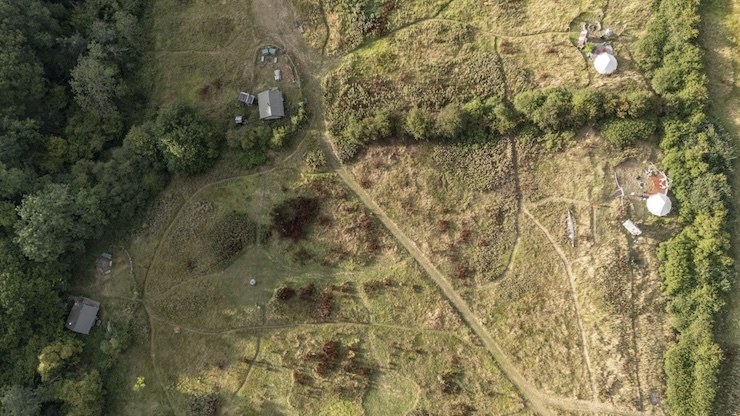
We’ve added ponds where the old springs bubble up on the farm and replanted an orchard with old Yorkshire tree varieties. We hope one day the woodland will gradually merge into orchard as it meets the hazel shelterbelt we planted last year at the top of the hill. Whether it will in our lifetimes I don’t know, but that’s OK too – nature doesn’t work to human lifespans, and this is a journey not a project with an end.
Anyway, I digress from my sunny summer evening with my beer. On the ridge of the hill below me a small group of adults and children have gathered quietly with binoculars to try and catch a glimpse of the owls; I can smell woodsmoke from campfires and hear children laughing. For we are not alone in these rewilding fields. As it has done for centuries, this small parcel of 26 acres of land must support those of us who live here – my partner Ed and I, and his elderly parents – and in these times of huge industrial farms we needed to find a new way for it to do that.
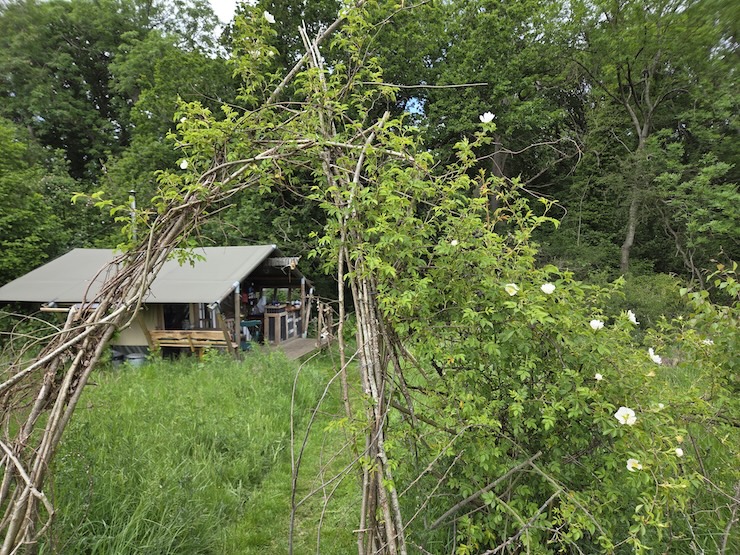
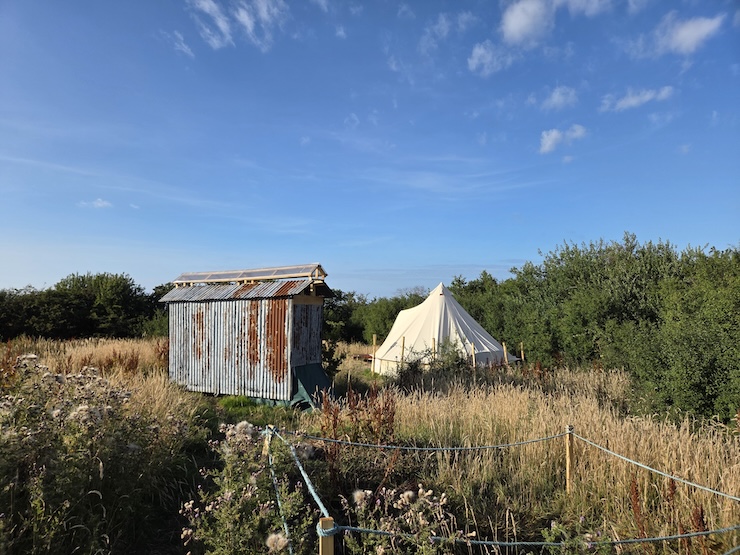
Unlike Ed’s parents – the last people to try and farm this windy hillside just outside Whitby – we’ve turned this place over to tourism. Try not to recoil in horror! We’re not talking about concrete and static caravans, or barns perfectly converted with mown lawns above the wild – but we wanted to find a way to share the wilderness with others.
We believe strongly that the wilding and the tourism can co-exist. That if done with careful thought, we can share this place with guests while being kind to the land. To have a business that is not just sustainable, but that allows the land to regenerate while still supporting us. If we get it really right, can we inspire those guests and show them what rewilding can do and what it looks like? Maybe even inspire some ecologists in the making?
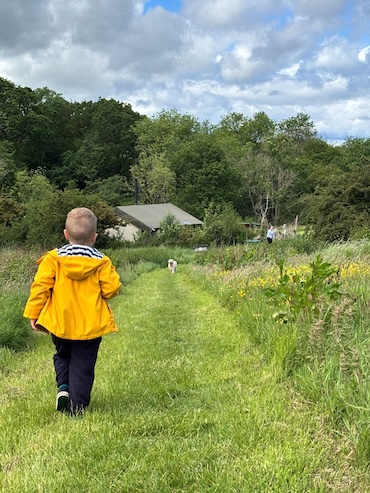
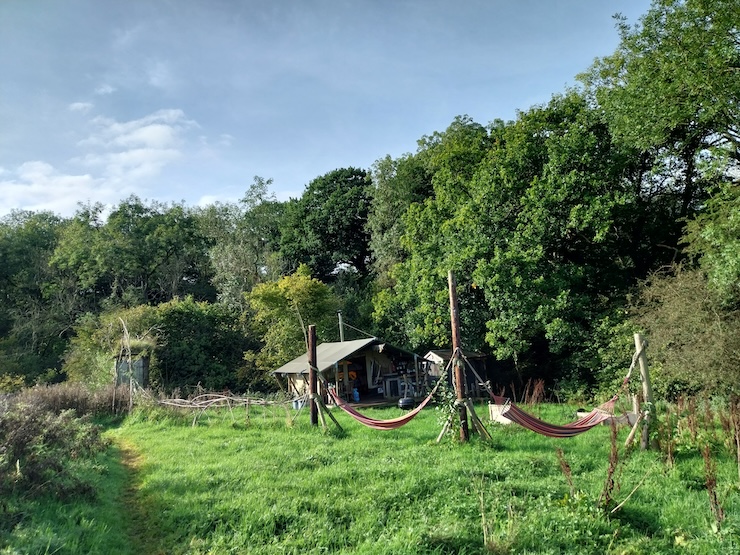
The guests stay in tents constructed by us – no concrete, no paths, no heavy machinery. They’re designed so that they could all be removed almost overnight and the land would be just as it was – only wooden posts go into the ground. Each camp is on its own away from the other camps, surrounded by nature, so guests feel like they have their own slice of wilderness for their stay.
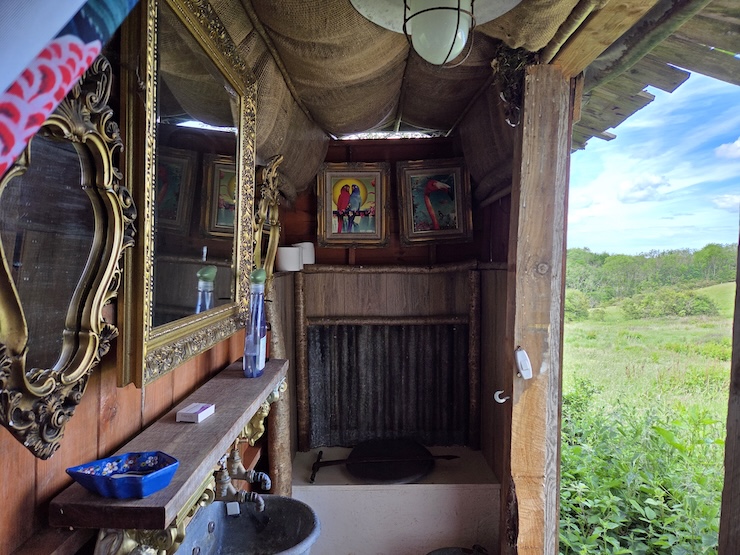
No cars are allowed on site; guests transport their stuff – merrily for the most part – in wheelbarrows down the hill from the car park. Camps are completely off-grid – no phone signal, no wifi – with solar lighting, water from our own spring to drink and shower, compost toilets made by us that rely on willow grown from our own whips to take away the liquid and stop them smelling, and willow banks for grey water drainage.
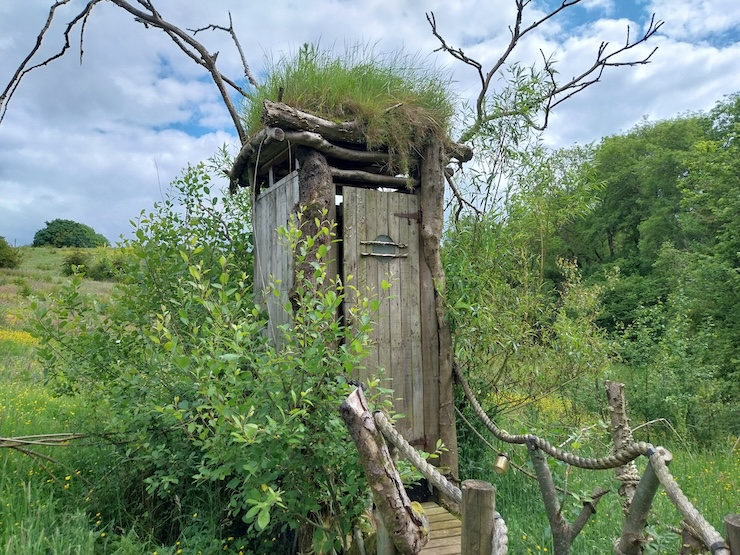
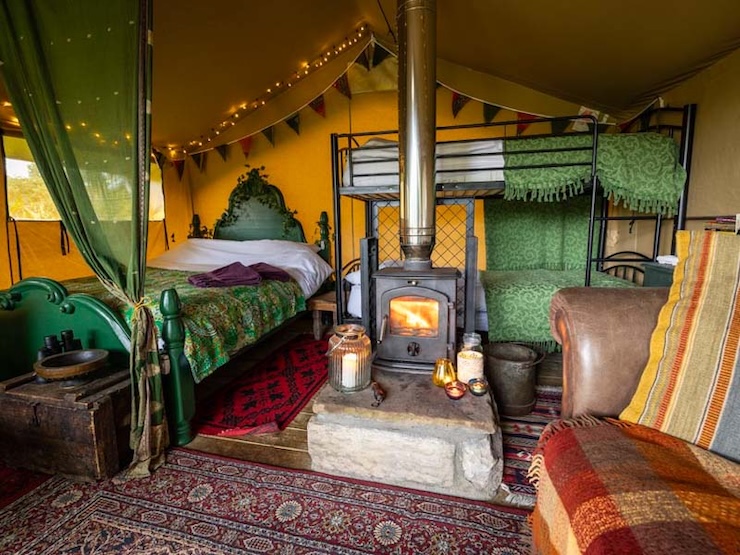
And nature has embraced it. The animals that historically lived in harmony with the older gentler farming techniques have accepted our guests as they would have done the farm hands in the past. The barn owls nest in the middle of the farm and happily hunt over the tents and guests, wrens nest in bathrooms (much to Ed’s annoyance having added no end of bird boxes which they’ve completely ignored!), and this year swallows are nesting in the apex of one of the tents – to the sheer delight of our guests. People have woken to deer in their camp, although we joke that the guests and their dogs are our apex predators, keeping the deer moving away from the sapling trees.
And the guests love it. We meet all kinds of people who want to get away from phones and the digital world, who are entranced by a barn owl floating leisurely across their camp, or delighted to be the guardians of the swallow chicks for the weekend. Kids have to put down their devices and go and be in nature. It turns out today’s kids are just as keen to make dams and climb trees and adventure in the beck as we were if they’re given the space and the freedom. And we trust them. They’re allowed to play in the woods, run in the fields, and splash in the beck, but we have faith in them to look after the place while they’re here – to be the guardians of their own piece of wilderness for a few days – and very, very few of them disappoint us.
It’s not a perfect solution – we’d like some grazers, and that’s an ongoing conversation about how you mix longhorn cattle with 20+ tourists! But we may find a way round it yet. The site is still building and growing, both in terms of adding more camps, but also more wilding projects. As I type this I’m considering an email from Yorkshire Wildlife Trust about where we could create more woodland this winter, while I eat the first plums from my tiny orchard.
Further information
[Image Credits: Coast and Camplight unless otherwise specified]