
10th January 2026
Three rewilders share what it’s like to host a YRN site visit
Bogridge Farm, near Otley – Reflections from the Ground.
Emma Burnett
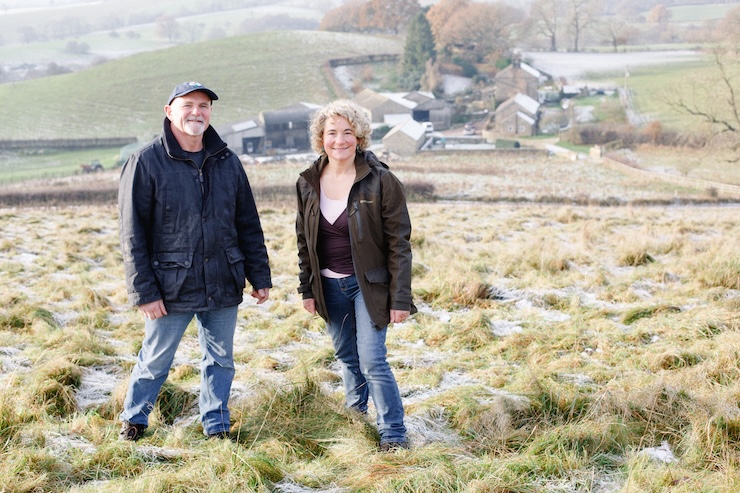
When the Yorkshire Rewilding Network asked if we’d be willing to host a site visit, I wasn’t entirely sure what to expect. As it turned out, opening our gates to fellow rewilders has become a really rewarding part of our year. It’s been a real pleasure to do and a meaningful way to contribute to the wider YRN cause.
We’ve now hosted three visits, and one of the joys has been that each one feels completely different. The mix of people who come along under the YRN umbrella is always varied and wonderfully eclectic. Landowners, ecologists, smallholders, community growers, farmers, students, people just beginning their rewilding journey, and those who have decades of experience behind them – everyone brings something different to the conversation. The questions change, the perspectives shift, and every visit leaves us seeing our own site with fresh eyes.
Another lovely element of hosting is being able to share how rewilding sits alongside our holiday cottages. Many guests who stay with us are increasingly curious about nature recovery and land management, and the site visits have given us even more confidence and more stories to share with them. Sometimes the holiday guests have tagged along too. It’s been rewarding to see how the rewilding work resonates not just with YRN visitors but also with people who come here simply for a peaceful break and end up leaving with a spark of interest in what we’re doing.
One of the things that has made hosting so straightforward is how supportive the YRN team are. They’ve been consistently helpful and well-organised, which removes almost all the stress on the host’s side. Communications are clear and timely, and they make sure we always know what to expect.
Practicalities are handled sensitively too. YRN help with the risk assessments, make sure visitor numbers stay within what we’re comfortable hosting, and generally take care of the bits that could otherwise feel daunting.
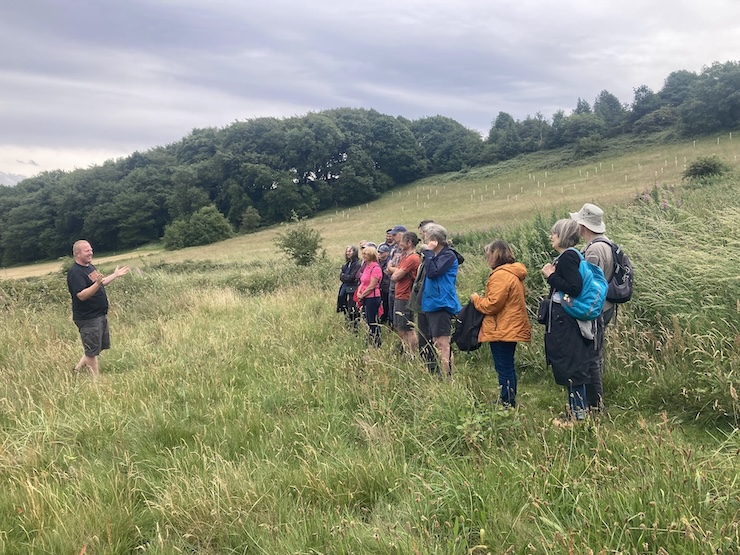
We all gather in the farmyard, and after some brief introductions from a YRN representative, Rob speaks about our project and plans we have going forward. Then we lead a guided walk around the farm stopping off at points of interest. All we really need to do is be there, show people around, and enjoy the conversations that unfold. We have finished with a cup of tea and piece of cake for anyone who wants one. And those conversations are really what make the whole thing worthwhile. Rewilding involves a lot of learning through trial and error, so spending time with others who share the same values and curiosity is energising. Each visit has given us new contacts, and a renewed sense of purpose.
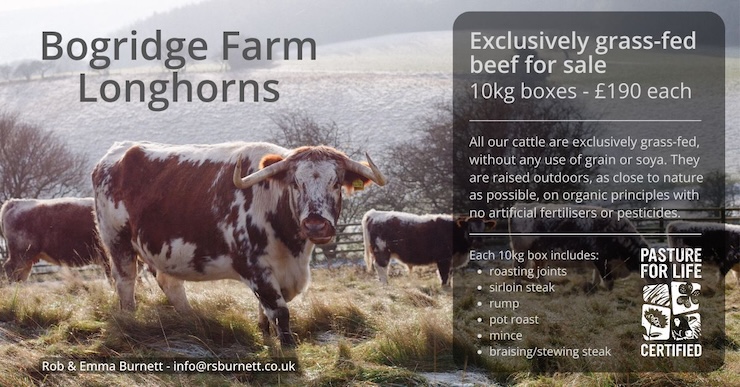
Three years on we have achieved Pasture For Life accreditation for our pedigree longhorn cattle. We are looking forward to the first sales of our home-produced boxed beef and also pork from our woodland reared Tamworth pigs in the next few months.
If you’re considering hosting a site visit next year, I’d wholeheartedly encourage it. It’s informal, enjoyable, and surprisingly inspiring. The YRN team make it genuinely easy, and the people who come along bring such enthusiasm and warmth that you end up getting at least as much from the day as the visitors do.
We’re already looking forward to the next one.
Heggs Farm, Arkengarthdale near Reeth, North Yorkshire
Elizabeth Sutcliffe
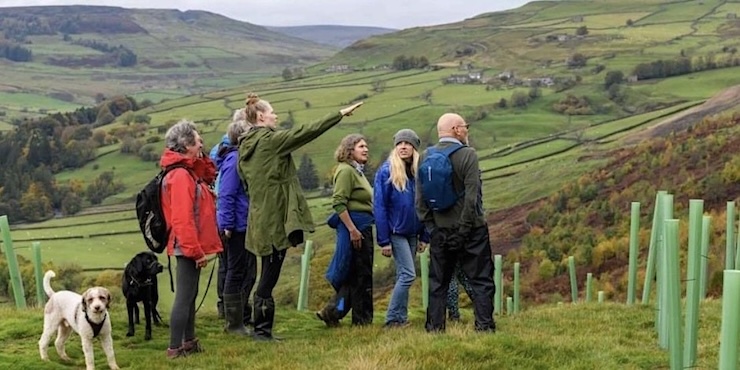
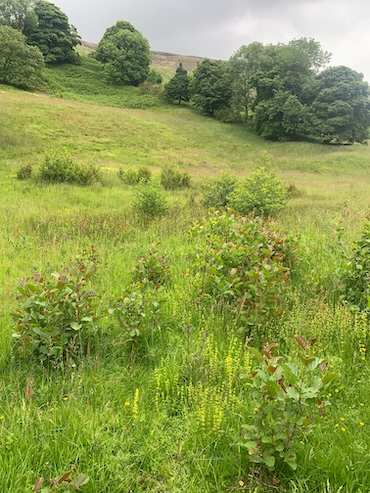
Connection, empowerment and education are all central to nature recovery at Heggs, so I really look forward to hosting the YRN summer site visit each year. There’s nothing like seeing your beloved landscape through a new pair of eyes; the feeling of renewed enthusiasm that the excitement of first-time visitors brings; and the heartening sense of support that comes from being in the company of a group of passionate, likeminded people.
It also provides me with a much-needed opportunity for reflection – something that can easily be forgotten when you spend a lot of time working alone, concentrating on a never-ending ‘to do’ list. As I recount the tale of Heggs so far, or pause to answer questions about why and what we’ve done, I realise just how much the landscape has changed (for the better) already: sure, there are hundreds of ideas yet to explore, but habitats are noticeably flourishing and it’s important to notice and celebrate that.
I am not an expert, nor am I a natural public speaker. Neither of these things have mattered over the last three years of YRN visits. The discussions are always wide-ranging, the questions thought-provoking (even if I don’t have the answers), and the exchange of ideas is diverse – and often incredibly useful! From young families to retirees, lifelong conservationists to people who’ve just stumbled upon rewilding, I never know who exactly will turn up on the day. All I do know is that it’s likely to be one of the highlights of my summer.
More information:
Instagram: @heggsfarm
Website: heggsfarm.com
If you want to stay over at Heggs and explore for longer, there are several options.
Available to book on CampWild.uk:
- Heggs Bothy, £45 per night for 1-6 people
- Heggs Wild Spaces (Peregrine’s Nest and Pine Island), £15 per night for 1-4 people
Available to book on AirBnB (summer only):
- The Annexe @ Heggs Farm, £69 per night for 1-2 people
There’s also a YRN feature story on Heggs which you can find here.
And a blog with recent a more recent update here.
Wilder Ewden and Wharncliffe, South Yorkshire
Dean Rae
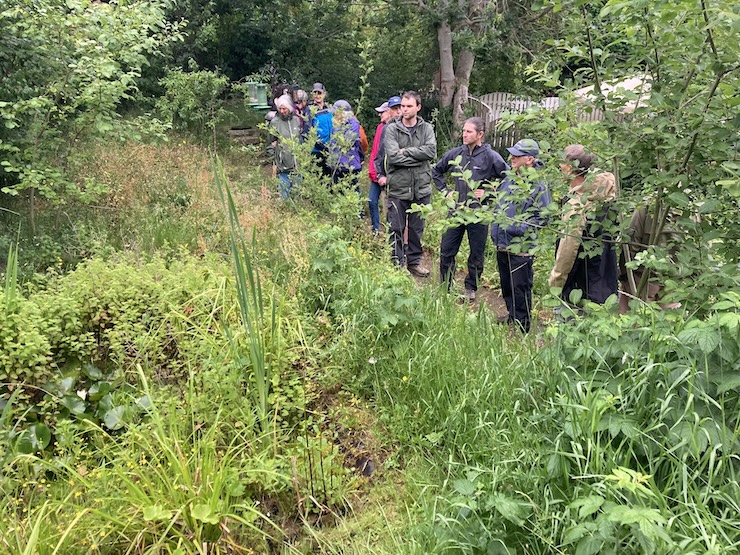
Andrew, Anthea and I formed a small community group in 2022 in an attempt to help make Wharncliffe Side, Brightholmlee, Ewden Valley and the surrounding area a bit wilder. The three of us have hosted tours of our wildlife gardens for four years now. The June 2025 tours were special because some attendees from our first tours (Neil and Zoe, and Margaret and John) agreed to add their local rewilding sites to the annual Wilder Ewden and Wharncliffe wildlife gardening tours itinerary, making five sites in total.
Attendees were a mixture of returners from previous tours and first-timers, some of whom had travelled a reasonable distance to be with us. Jenny Marks from YRN did a lot of the organising, including the Eventbrite bookings, for which we were very grateful.
As usual, we started the tours in my gardens following a brief introduction. I talked about my wildflower meadows, native hedges and wildlife ponds, and shared my garden highlight of 2025 – a pair of starlings used one of my nest boxes for the first time and expanded the local population with four boisterous fledglings in May! A close second was a brimstone butterfly ovipositing on alder buckthorns, a scarce shrub in the area. These are clear examples of the ‘build it and they will come’ mantra.
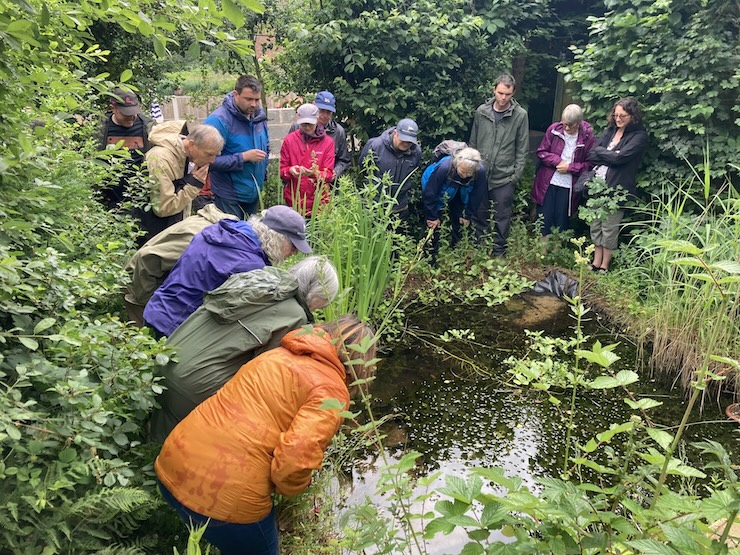
Across the road, Andrew hosted next, and everyone present benefitted from his expert ecological knowledge. We spent a considerable amount of time admiring his pond, which is extremely generous in proportion to the space available, and took Herculean efforts to dig by spade and pick axe. Andrew is cultivating and nurturing lots of native shrubs and trees in pots that are destined for a local nature reserve for which he and I are trustees. Hopefully this inspired people to think beyond their own gardens to how they can help wildlife in their wider vicinities.
Andrew and I have modest gardens typical in size for 1950s-built semi-detached social housing (but far larger than the postage stamp gardens accompanying most expensive new builds today). We believe it is important to include smaller sites in rewilding tours because most people live in houses with smallish gardens, and this showcases what’s possible in terms of gardening for wildlife in a way that is relatable to for many. Lots of smaller gardens add up to large spaces, creating valuable habitat and opportunities for nature connection on people’s doorsteps, if only people could be persuaded to share their gardens with wildlife, rather than treat them like just another room in the house, to be kept tidy at all costs.
With Wharncliffe Side tours finished, we popped up the road to Anthea’s house in the hamlet of Brightholmlee. Before the garden tour, we called in at Anthea’s third-of-an-acre orchard that she has been restoring for 12+ years. For a few years we’ve been strimming, and more recently scything, the rank grasses to give the young fruit trees the conditions they need to thrive, and to create wildflower meadow areas. After the orchard tour, Anthea introduced her approximately half-acre garden, which she has made even more wildlife-friendly in recent years, restoring a wildlife pond, creating bog gardens, new meadows and thorny scrub areas, and building twigwams and a ‘Woodhenge’. After the tour we enjoyed talking over lunch while enjoying views of Ewden Valley to the west and Wharncliffe Woods to the east.
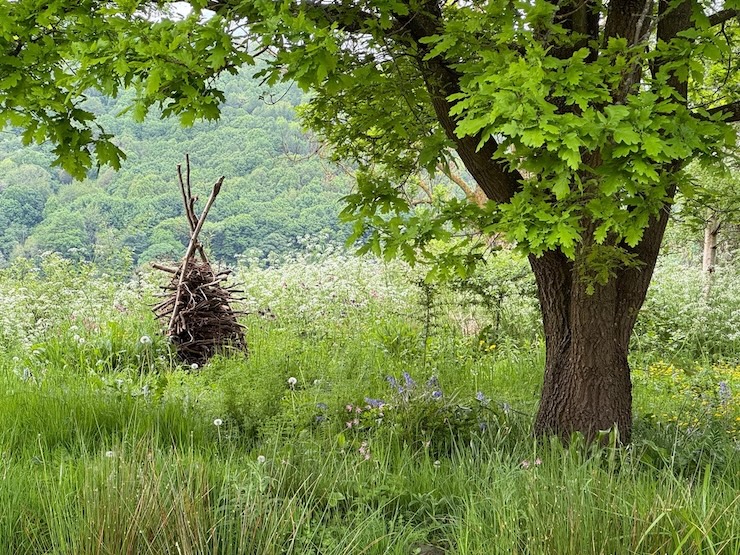
Following a short drive we arrived at Field Farm, a 12-acre site just outside Wharncliffe Side, owned by Neil and Zoe who have lived there for a few years. This is an awesome site bordered by excellent scrub on one boundary that supports yellowhammers, and semi-mature oak woodland on another boundary in which pied flycatchers nested for the first time in 2025, in a nestbox funded and installed by Wilder Ewden and Wharncliffe! Neil and Zoe are in the process of creating sizeable wildlife habitats; 1,100 trees and shrubs were planted the previous winter to expand the existing woodland and scrub, which were recently linked through a native hedge wildlife corridor, and there are plans for potential wetland areas.
Another short drive took us to Oughtibridge Hall, home of Margaret and John. These keen gardeners grow lots of fruit and veg, distributing it among friends and donating some to local food charities. They have recently created wildflower meadows, experimenting with different approaches in subsequent years. This autumn a group of us helped scythe and rake these meadows, which are already splendid and should improve floristically year-on-year with appropriate continued management. Margaret and John recently planted a native hedgerow over two years which is establishing well and will buffer the site from the nearby road. During the tour they showed us their newly restored wildlife pond, providing another valuable habitat on site.
This concluded the tours of the five sites, all very different, and all works in progress. Leading up to the tours, I was feeling disillusioned because, despite the ongoing efforts of Andrew, Anthea and I, we haven’t been able to inspire any of our immediate neighbours to engage in wildlife gardening. Quite the opposite – like most places the trend seems to be anti-weed fabric and stone chip driveways, paving, decking, unnecessary floodlights, excessive mowing, and even artificial grass. After speaking to Andrew and Anthea, and Jenny from YRN, I asked Neil and Zoe, and Margaret and John, if they would be interested in hosting tours alongside us, and we were delighted that they agreed. They all did a brilliant job, taking to hosting like ducks to water! Their contributions added real value and breathed new life into the Wilder Ewden and Wharncliffe annual wildlife gardening tours.
More information:
You can read a blog about the summer site visit in 2023 here.
[Image Credits: YRN, Emma Burnett, Gray at Scenic Gallery Reeth, Dean Rae]