
By Anna Williams
3rd September 2026
In a small village on the outskirts of York, a visit to a one-acre garden that is being transformed into a haven for wildlife leaves me feeling peaceful and deeply connected to nature. Despite the village being surrounded by farmland, in this garden, nature is being given the space it needs to thrive.
Nina and her husband purchased the plot in August 2023, and at the heart of it stands a 200-year-old English oak tree, surrounded by a mosaic of habitats including wildflower meadow, woodland, ponds, deadwood piles, scrub, orchard trees and compost areas. For Nina, the aim has been to understand this small area of land and the nature that thrives here. “We let it go truly wild for the first year,” she explains. This was time to be spent simply observing the species already present, giving dormant or supressed species a chance to establish, and understanding where some light management could help nurture the habitats into a better state for more species.
Nina tells me one of the most interesting parts of the project is watching how the garden changes year by year. The family enjoy observing what different species and habitats thrive each year, and are constantly adapting their management to suit and nurture different areas.
Wildflower meadow
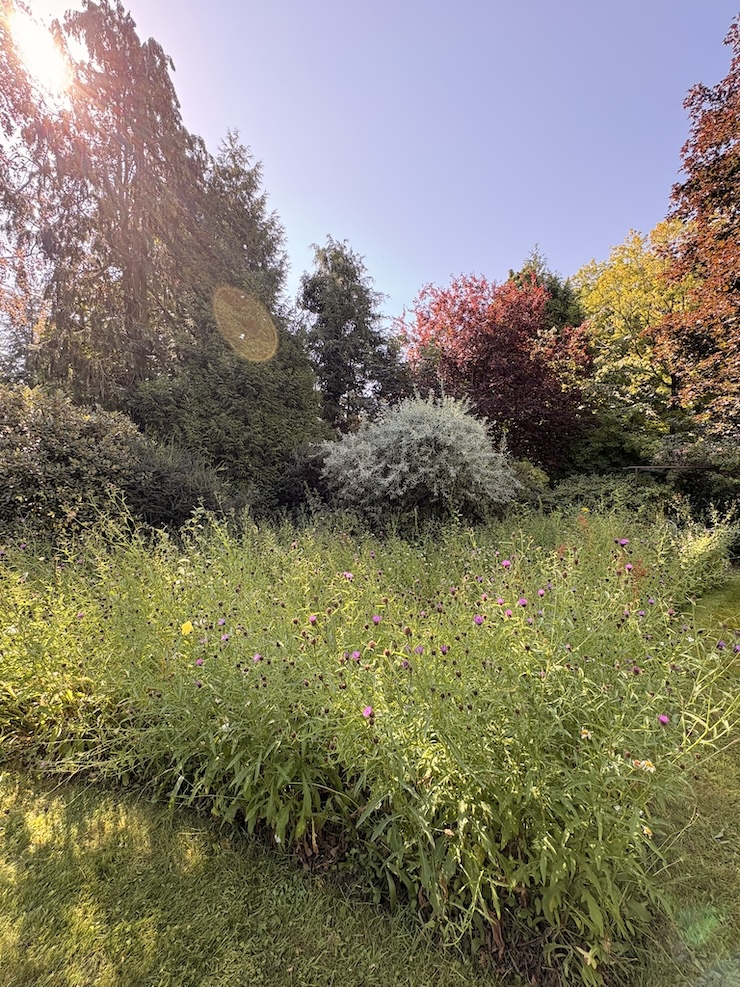
We began the visit by wandering down a narrow mown path through the small but beautiful wildflower meadow. The meadow began with native wildflower seed sourced from the local Forest of Flowers site in York. Having recently visited that site too, it was wonderful to see the connections between local nature recovery sites, with seeds being gathered nearby, shared locally and then blooming in a private garden. By mid-July, the wildflowers were buzzing with life. The oxeye daises were coming to the end of their flowering period, but other species like common knapweed and teasels were in full bloom, and Nina recalled how in the previous year foxgloves had brought a burst of colour to the same area. Insects were making the most of the summer flowers, with meadow brown and peacock butterflies fluttering around us. The management of the meadow area is gentle, with the plants being left throughout winter to allow birds to feed on the seeds and insects to shelter. In April the meadow is then cut by hand, and cuttings are left in piles at the garden edges beneath trees, giving insects the chance to crawl away.
Woodlands
Previous owners of the house and garden were horticulturalists, and had planted several unusual – but also non-native – tree species. For safety reasons, some of these needed to be removed, but the wood was not wasted. Instead, it was stacked into deadwood piles around the garden, creating vital habitats for beetles, fungi and various small invertebrates.
The few woodland areas each have their own character, and had all been largely left unmanaged. One, backing onto the road behind a hedge, has been left alone and becomes awash with bluebells in spring. It is also a regular route for a local hedgehog visiting from a neighbouring garden. Another small woodland area was home to a female hedgehog, who chose the quiet space to build her nest. The family responded by leaving the area undisturbed. Nearby, the fruit of a crab apple tree grows out of reach, and is left for birds and insects to claim.
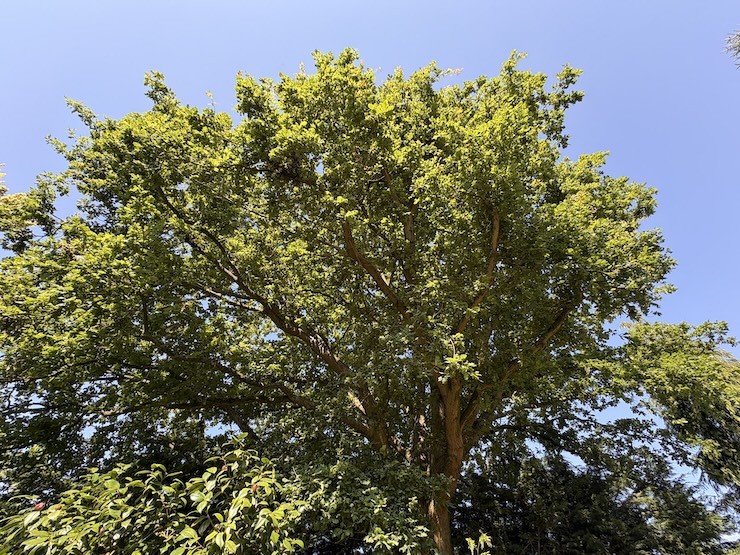
In autumn, the ground beneath the garden’s magnificent oak tree becomes scattered with acorns, and Nina hopes to share its saplings with Treemendous York, allowing this remarkable tree to live on beyond the garden. Autumn leaves are used to create habitats for small insects and mammals, with the family raking them off the lawn and into wild areas, as well as using them as mulch in the greenhouses.
Brash piles and roof tiles
A deadwood hedge marks the boundary of the family’s vegetable patch, and scattered around the garden are various brash piles, the old material creating wonderful shelters for wildlife.
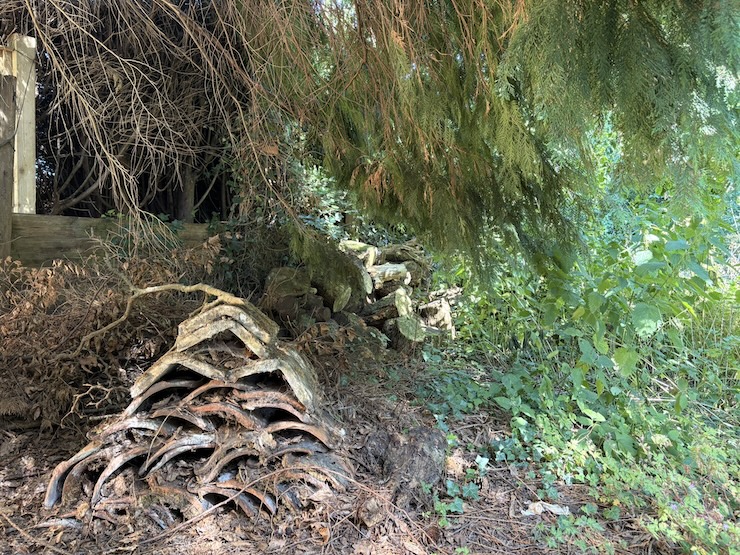
Meanwhile, old roof tiles from a shed have been piled up to make a simple but effective shelter. These structures can provide cool crevices to hide in and hunting grounds for amphibians, insects and other small creatures – again demonstrating the importance of reusing old items.
A grass meadow and orchard
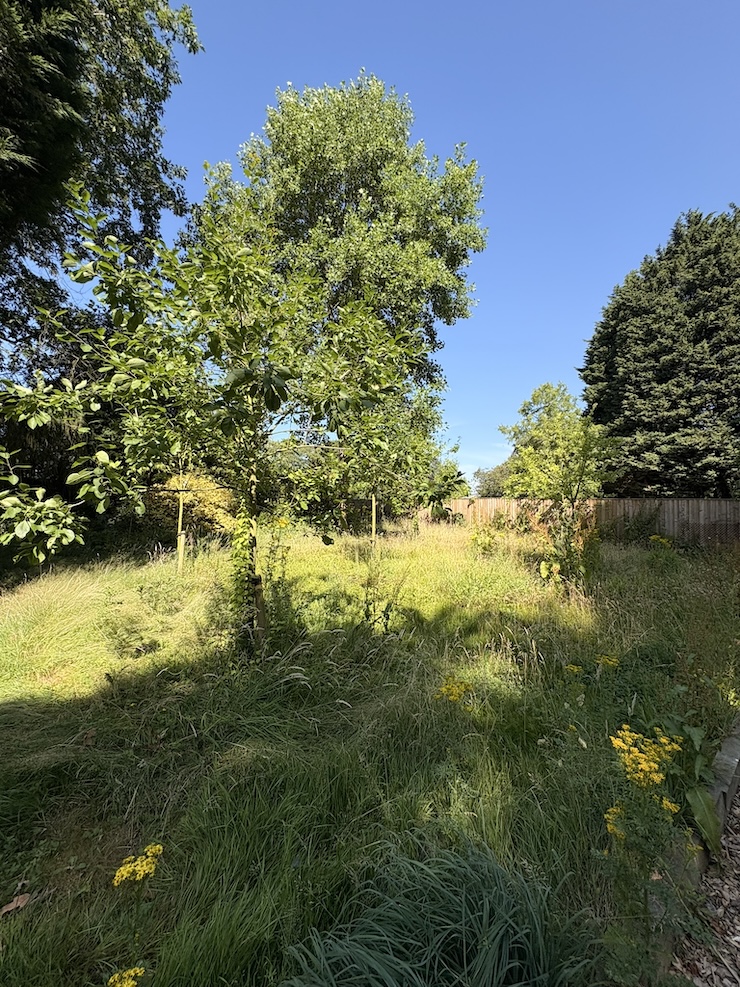
The grass meadow with planted fruit trees including apple, pear and plum offers another unique habitat, and is useful for both wildlife and people. The turf here was dug up from the vegetable patch area of the garden, rolled up and re-laid, to ensure that the biodiversity within it was not lost.
Today the meadow is populated with creeping buttercup, ragwort and wild strawberries – the butterflies clearly love this area. Nina cuts the meadow back in autumn with a strimmer, after disturbing the grass first to flush out any sheltering animals.
Balancing food production and wildlife
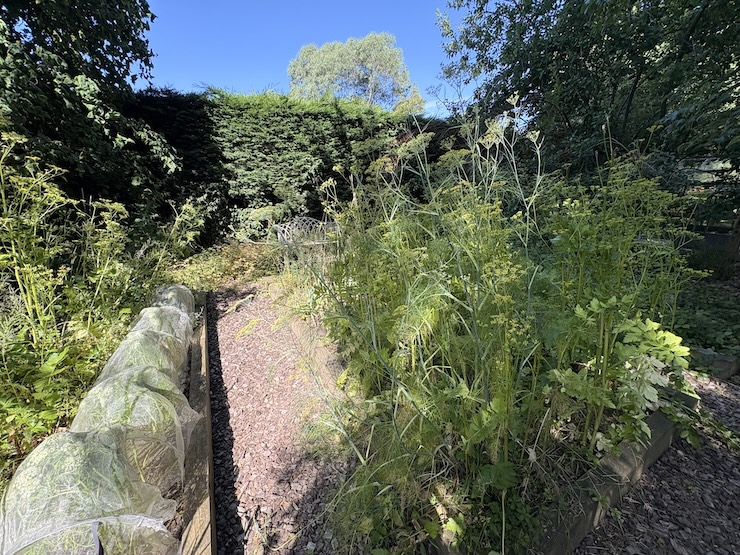
There are a number of productive areas throughout the garden. This year, with less time to maintain them, some of the family’s vegetable plants have gone to seed, but what might look untidy to some is actually valuable food for insects.
The family carefully ensure that any unused food is shared generously. With a thriving greengage tree with more fruit than can be eaten by the family, Nina tells me that they share the fruits with Abundance York, an organisation that collects surplus fruit and puts it to good use, including donations and preserves.
Bramble patches throughout the garden are kept in check but are not entirely removed. They provide a source of food for birds, dense cover for small mammals, and flowers for pollinators.
Aquatic life
Two small ponds provide vital habitat for amphibians and aquatic invertebrates. Although water levels were low during the July heatwave and dry spell, the ponds remained important refuges. Around one pond, stones and vegetation create cover, and the family have seen both toads and newts making use of the habitat.
Underground wormeries and hedgehog holes
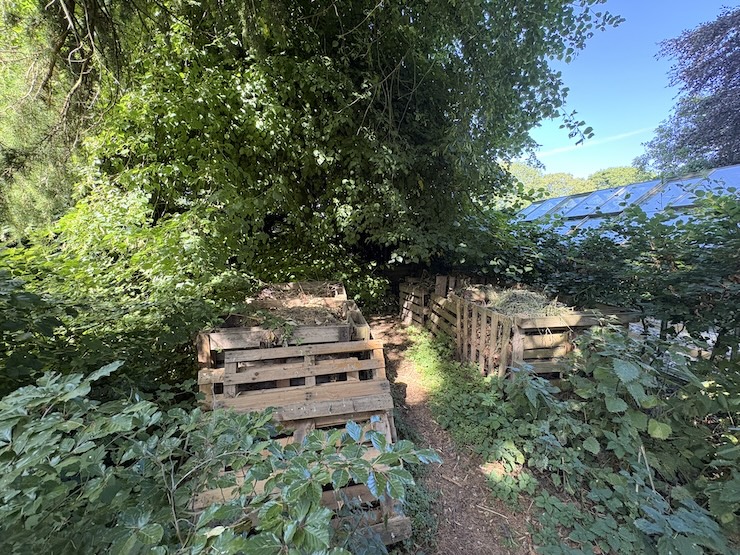
Even the practical aspects of the garden have become important habitats. An underground wormery helps recycle food waste, while five large composting bays, built from heat-treated pallets, turn garden material into rich compost and provide a warm, sheltered place for wildlife. There are a number of rainwater butts around the garden, a vital resource for the garden’s plants and wildlife during dry spells.
At the far end of the garden, small holes have been cut along the base of the fence every couple of metres, allowing hedgehogs to move between gardens and reach different areas for food and shelter.
Leave a little more space for nature
Nina agrees that managing this garden is a balance between family life and careful stewardship, doing the bare minimum where possible, but also maintaining the mosaic of habitats that make the garden so valuable for wildlife. Nina is keen to prevent one specific species or habitat type taking over.
Despite not having a formal background in rewilding or ecology, Nina has done a wonderful job at creating a garden that provides for wildlife in many different ways. She has always been interested in nature, growing up in the countryside and watching David Attendborough. More recently, Mary Reynolds’ book We Are the Ark inspired her to begin researching how she could contribute to the rewilding movement and nature recovery in her own garden.After three years of rewilding, tawny owls, bats, toads, newts, butterflies, moths, hedgehogs, rabbits, mice and a wide variety of songbirds all live in or visit the garden. It’s a reminder that rewilding does not need large areas or dramatic gestures: sometimes it begins with observation, patience and the decision to leave a little more space for nature. Nina’s project shows how even a family garden can become something truly special, for wildlife, and for the people lucky enough to experience it.
Further information and helpful links:
Image credits: YRN