By Kate Graham
19th September 2025
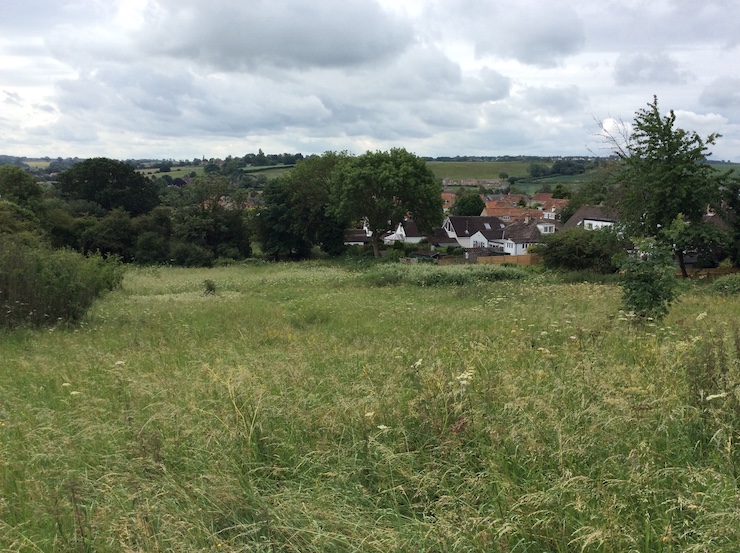
Often when I visit a rewilding project, I’m struck by the farsightedness of the owner or group leader, imagining how the land will look 30 years ahead. It’s an exercise of imagination and faith. However, with the East Keswick Wildlife Trust, no imagination is required. David and Melanie Smith set up the Trust 30 years ago, and over the years they’ve probably met most of the issues faced by rewilders. They’ve learnt about plants, how to propagate native wild flowers, how to manage grazing effectively, look after livestock, manage woodlands, create a charity rooted in community and social enterprise, buy land, work with a wide range of volunteers, communicate about their work, become financially sustainable – and much more.
East Keswick is a small village close to Harewood Hall to the north of Leeds, built largely on magnesium limestone, bordering millstone grit. The Trust currently owns or manages 101 acres of woodland, marshes, wildflower meadows, and the newly purchased 24 acres of Bardsey fields and fen, which its supporters are now restoring and re-wetting.
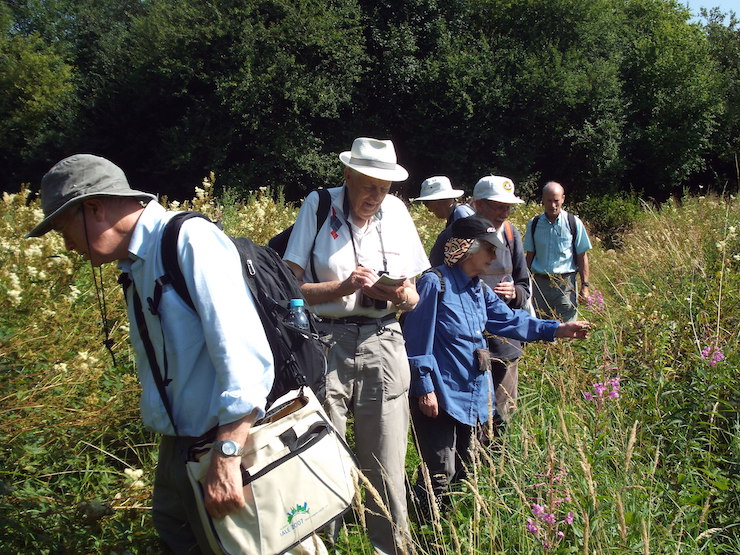
The Trust is constituted as a charitable incorporated organisation (CIO) with 12 Trustees, including David and Melanie. They started out all those years ago with a visit to a group in Lincoln to learn how to collect, germinate and plant wildflower seed. Now they have a thriving nursery of rare native plants, and train and advise others on how to get from seed heads to plug plants. When I visited, the meadow next to David and Melanie’s house was a multi-coloured swirl of flowers – yellows, reds, blues, purples and whites – alive with hoverflies, bees and a myriad of small moths. Some I recognised, some were new to me. David pointed out a brown stalk sticking up by the path: this was thistle broomrape, only found in Yorkshire, and incredibly rare despite the prevalence of its host, creeping thistle. A solitary gatekeeper butterfly braved the rather grey day.
I was struck by the sheer detail of plant knowledge displayed by David and Melanie. They have recorded every plant in their 100 acres, and the Trust has a volunteer experimenting with drone photography to make this easier. They have successfully propagated some of the rarest flowers in Yorkshire.
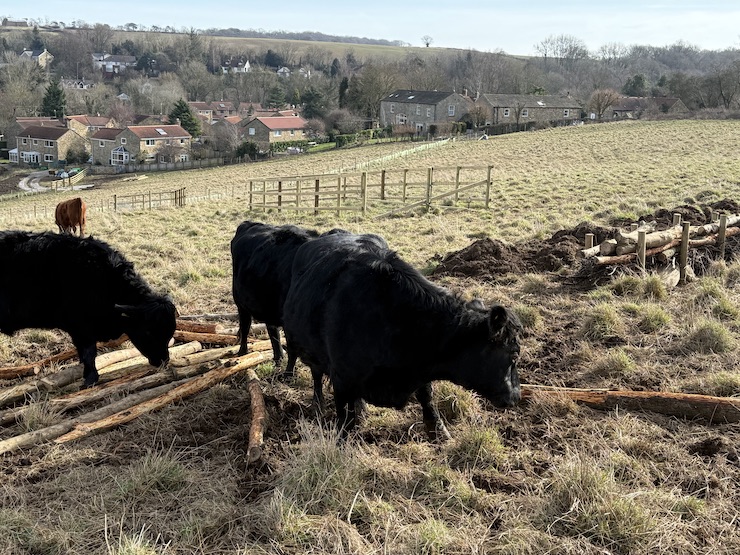
This meadow is lightly grazed in the autumn and winter by the Trust’s much-loved Dexter cattle. David described how they eat very selectively, choosing exactly what they wish to eat that day in contrast to the average cow’s diet of grass and thistles. This breaks up the sward, increasing diversity – in contrast to the Soay sheep, who tend to eat everything! No additional feed is required through the winter. The cows will sometimes eat the bark of certain trees, probably self-medicating: these are incredibly healthy animals.
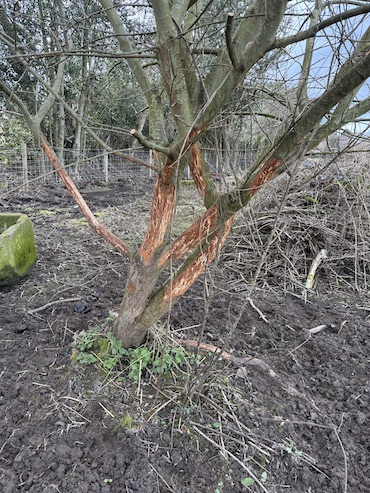
valuable future crevices and standing deadwood. Credit: YRN
At three years old the bullock calves (David has learnt how to castrate and de-horn them) go in pairs to the abattoir, where they’re hung for four weeks and then sent on to a butcher for jointing and labelling. David recounted how the butcher, on seeing the meat for the first time, gathered his apprentices around: he hadn’t seen meat like this for 50 years. The beef is sold locally, largely to Trust members.
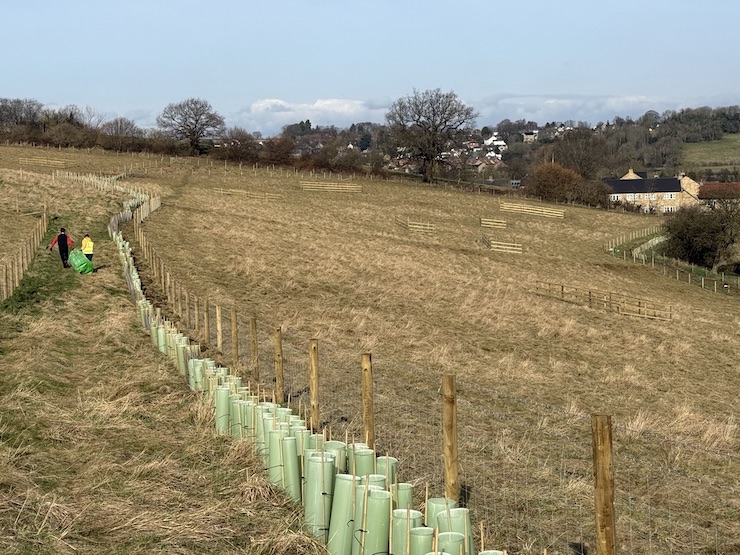
One of the woodlands owned by the Trust used to be a golf course driving range: it’s hard to imagine as trees tower over us, giant bell flowers and succulent wild raspberries ringing the path. These are elms and ash; they’re fast-growing but unfortunately both species are being killed by disease, so they’re gradually being replaced with more diverse woodland planting. Trust members learnt how to make charcoal early in the project, again sold locally, and bought the machinery required to create uniform logs – air-dried, these find a ready local market.
It costs about £20,000 each year to run the Trust, which is covered through trading income from logs, charcoal and beef, together with government grants for land stewardship and membership fees. There are no paid staff, but volunteers put in a huge amount of time. Each Friday a group of volunteers starts work in the morning for a full day, finishing with a celebratory drink. This is an important social occasion as well as being hard work: participants value the chance to do something outside, often involving new skills, and with other people. Such activities can be something we miss, particularly on retirement.
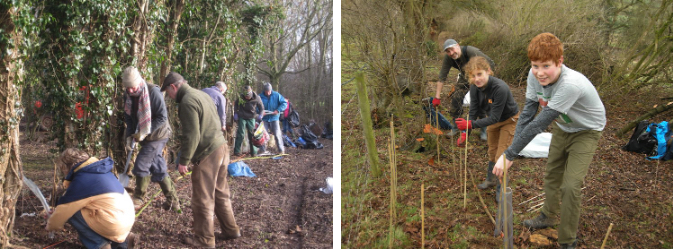
I got the impression that David and Melanie work pretty much full-time on this, not only on practical initiatives on the land, but also on the huge amount of administration and planning required. Each Friday takes careful preparation to ensure there are tasks and tools ready and that health and safety requirements are fulfilled. Government grants take time to research and apply for. They produce a regular newsletter. And, of course, they host visitors like YRN and local wildlife groups, inspiring others – such as the Menston Area Nature Trust – which are now actively following in their footsteps.
Increasing the Trust’s land remains a priority: anything it owns will be protected whatever happens, as the Trust’s constitution requires that its assets go to a similar wildlife trust should it ever need to be dissolved. The Smiths are also thinking about succession planning, which is a challenge for the founders of any small charity.
They combine their passion for restoring nature with a real entrepreneurial spirit, and a sense of the possible. One problem is the prevalence of American mink, which are blocking the reintroduction of native species such as water voles. Technology now allows remote traps to be easily monitored, but these are expensive: at £350 each it would be difficult to buy enough of them to catch all the mink. David, however, has designed his own version made from cheap recycled materials, which will cost about a third of the price of the other model. Not only will this enable EKWT to remove their mink, but the design can be used by similar groups all over Yorkshire and beyond: it’s a brilliant example of what a social enterprise can achieve in practice.
David, Melanie and all the volunteers who work with them have created a model of how nature and a community can grow alongside each other. It’s an inspiration and a wonderful demonstration of the art of the possible. Thank you!
To find out more, donate or volunteer, you can visit the Trust’s website here.
Image credits: East Keswick Wildlife Trust (EKWT) and Yorkshire Rewilding Network (YRN)