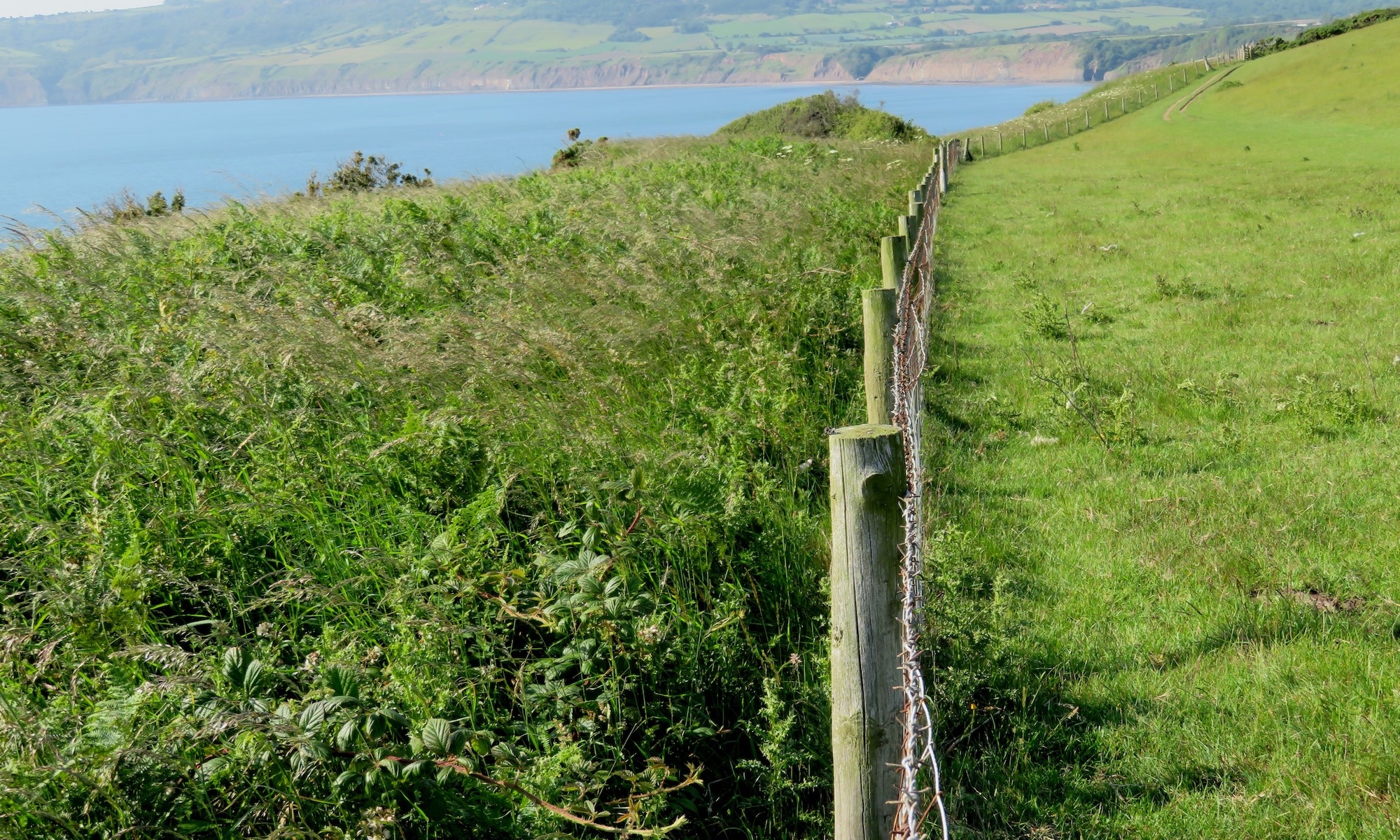
Evan Jeffries is amazed by the remarkable transformation of a farm in the Dales.
By Evan Jeffries
18th June 2026
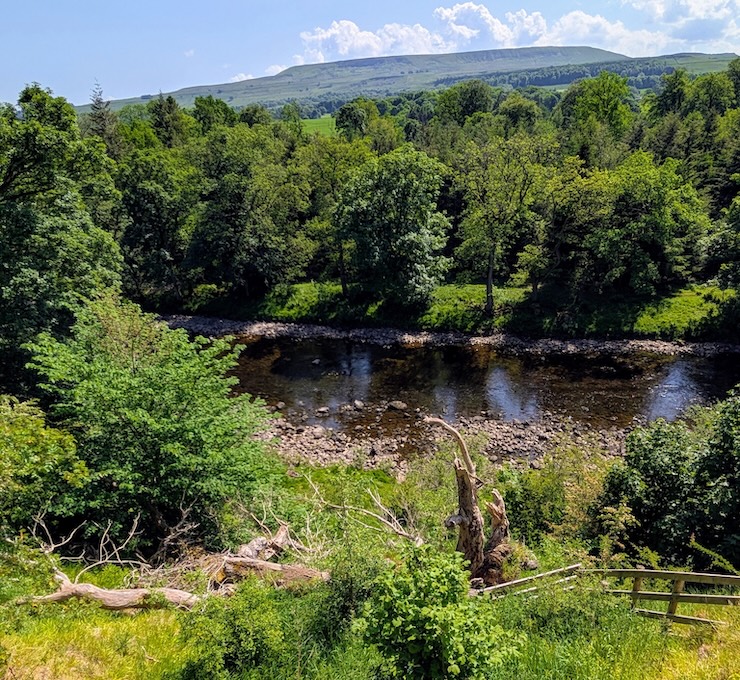
In a world gone mad, rewilding gives me hope. The work Martyn Strong has been doing in Wensleydale at Redmire’s Mill Farm, where he moved with his wife and two young sons six years ago, is more than just impressive. I’d been lucky enough to spend a glorious heat-soaked afternoon up there with him at the end of May, and as I drove back south on that road that runs the length of Wharfedale it was hard not to feel a bit emotional about what I’d seen.
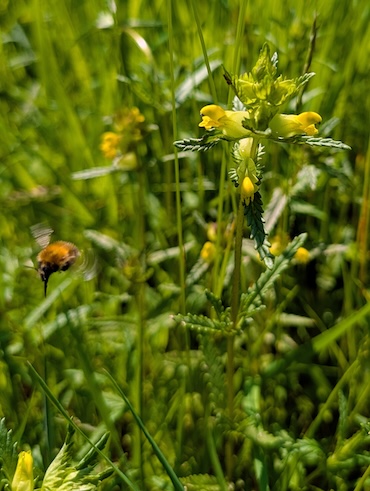
Mill Farm is ten acres of rich profusion, of nature running rampant across what not so long ago was lightly grazed pastureland. Today it’s positively teeming with life – loud with birdsong, nectar-scented, buzzing with insects. Trees are shooting upwards in a new wood; a burgeoning mosaic of scrubland stretches across former pasture; an acre of fast-developing wildflower meadow provides a ridiculously pretty view from the old farmhouse on the way to a stretch of riparian forest that drops steeply down to the River Ure.
The magic of rewilding is that you don’t need much land or many years to make a massive difference to the world around you. If you have a determined vision, get good advice from the right people, are prepared to make and learn from lots of mistakes, and have a passion for what you’re doing, then nature itself will do a lot of the heavy lifting for you. Give it a chance, watch it go. That’s what Martyn has done, and up at Mill Farm the speed and scale of change – even in this relatively small area – is breathtaking.
A world of water
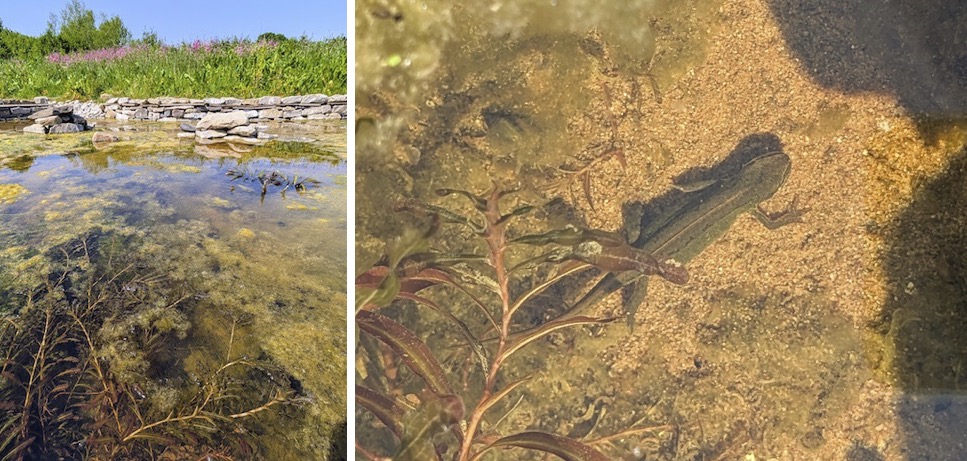
A wetland area bisects the property, separating the scrub and a patch of woodland. Previously, this was plain grazing land with a narrow ditch-like stream running through it – but it’s totally changed now after Martyn went at it like a beaver, damming the ditch at one end to create a wider, permanent expanse of water, then digging a series of connecting channels through the surrounding fields, and scooping out some ponds.
As the ground became wetter, water-loving plants began to appear of their own accord, and Martyn sourced various other native species to build up the ecosystem, from the rare water soldier with its pineapple-like crowns to the dense stands of late-flowering purple-loosestrife that line the channels. As they grow and spread, the plants increase oxygenation in the wetland and improve conditions for a multiplying web of other species.
Today, the wetland at Mill Farm shelters an abundance of life: you’d never believe it has only taken six years to reach this point. Moorhens and mallards breed in the reeds, and mandarin ducks are among the many frequent visitors. Several types of dragonflies and damselflies were zipping around when I visited. All three species of British newts – smooth, palmate and great crested – are present, with Martyn and his son counting 36 individuals during a single foray on a recent evening.
Return of the natives
And the wetland is home to another very special creature too. While everyone’s rightly excited these days about reintroducing beavers, at Mill Farm the big story is the reintroduction of a much smaller water-dwelling rodent: the water vole. One of Martyn’s most important achievements so far has been to establish a local population of these endangered natives. After some preparatory work with renowned rewilding guru Derek Gow (“A force of nature,” smiles Martyn, “and a real inspiration”), 36 voles were released into the wetland – and it turns out their new home suits them down to the ground. Wensleydale has water voles again!
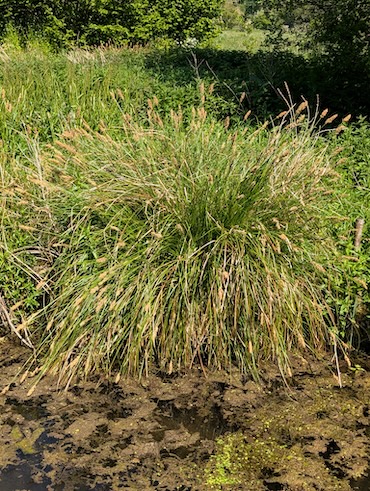
One of the plants that Martyn has introduced for the new residents is greater tussock sedge, an ancient native grass that can reach a height of five or six feet. Following the arrival of some specimens from the South West, it now punctuates the wetland at Mill Farm, thrusting up in great clumps whose thick roots provide perfect shelter for the voles – and for many other creatures. You can see patches in the sedge where the voles have nibbled and flattened the stalks to create little platforms above the water where they like to pass the time. The voles forage and burrow in the banks, the disturbance they create adding to the complexity of the habitat and particularly benefiting plants and invertebrates.
The trappings of success
This reintroduction is a significant regional initiative. I knew that water vole numbers had fallen sharply in recent decades, but I was shocked to discover quite how precipitous the decline has been: from a population of 8 or 9 million at the end of the 1960s, just 150,000 now remain in Britain. The distinctive ‘plop’ of a water vole dropping off the bank is a sound not many people have ever had the pleasure of hearing.
Perhaps surprisingly, the huge fall in their numbers isn’t primarily due to the usual story of habitat destruction. In fact, the key factor is another aquatic animal: the non-native, North American mink. This invasive and devastatingly efficient predator has been cutting deep swathes through native species populations in recent decades, and the harm it has done to our water voles is horrifying – a 97% reduction in 50 years speaks for itself.
Keeping the mink out is the single most important factor in the success of the project so far, and Martyn must regularly check the pair of mink traps he installed with the help of the Waterlife Recovery Trust. While some rewilders might question the ethics of culling any animal, the simple fact is that where mink are present, they will kill enormous numbers of native creatures and wipe out entire species populations across large areas – while where they’re not present, native species have a chance of recovery. Killing one animal that shouldn’t be there in the first place will save thousands of others that should. (If any readers need convincing of this harsh but important truth, I’d strongly recommend looking at what the Waterlife Recovery Trust have to say about it below.)
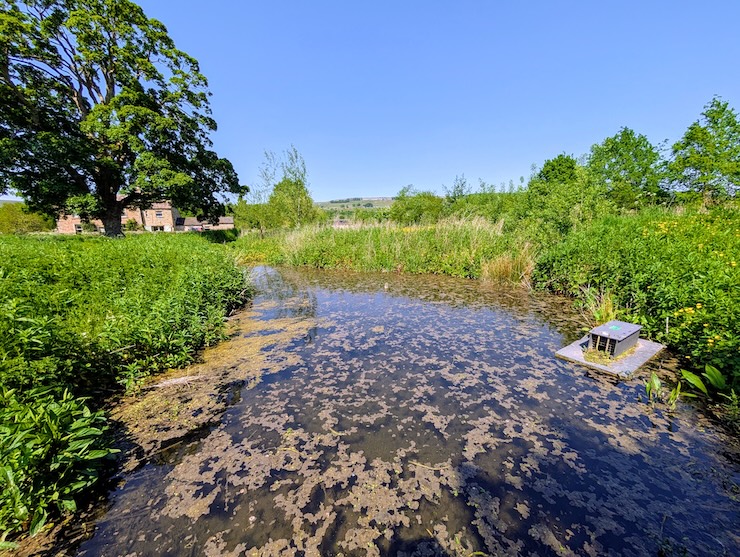
Looking after the wetland could be a fulltime hobby in itself, but there are other developing habitats at Mill Farm too, not to mention several more rare species to nurture, and Martyn divides his labours between them.
The woodlander
Planting 4,000 native trees – some as hedgerows, some as woodland – has been another major element in the plan. Of particular note are a dozen black poplars, Britain’s rarest large tree: with only some 2,000 left in the wild, of which around 400 are female, the healthy young specimens at Mill Farm hold a promise for the future. Near these poplars is an orchard, which Martyn says is “awash with butterflies” later in the year.
Clearing trees is part of the picture too: Martyn speaks of the “permanently temporary state” of managed woodland, with a static closed canopy not being what you want to aim for. Letting light in, thinning out certain species, creating an understorey and deadwood piles – they’re important in the trees up by the farmhouse as well as in the established woodland down by the river, creating a more dynamic and diverse habitat. In the latter location, Martyn has also been fighting to clear an infestation of Himalayan balsam, which if left unchecked will quickly take over large areas to the exclusion of other plant species. He and I share a particular hatred for this loathsome invader.
Deadwood piles of various ages feature all over the property, especially in the scrub. Invertebrates love these, but they’re also important for other creatures – wrens and dunnocks nest in the piles at Mill Farm, and there are weasels in there too. Strategically scattered reptile mats provide warmth and shelter for coldblooded creatures.
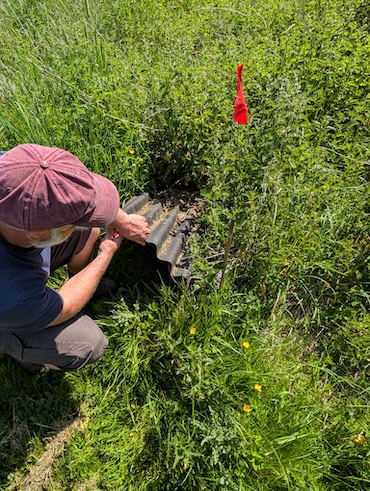
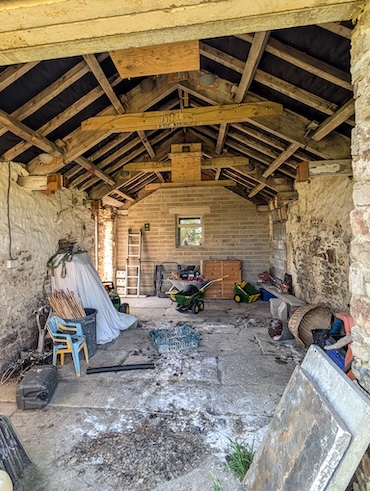
If you look carefully in the surrounding scrub, you can see signs of the population of harvest mice that Martyn reintroduced a few years ago, their nests woven from live stems – greater tussock sedge is a particular favourite for the purpose. Field vole tunnels through the grasses are everywhere, and it’s no surprise to hear that for the last three years two barn owls have been nesting in boxes Martyn put up in an open stable: this is prime hunting territory, full of prey. Bats – many of which live in the ivy in the woodland – come out at twilight to feast on the insects over the water.
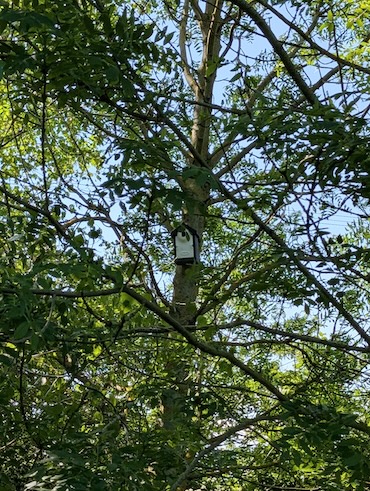
Mill Farm is a haven for birds, too, with 73 species so far recorded as resident or returning for more than a single season. Putting up more than 100 nesting boxes of various shapes and sizes has clearly helped – their current 60-70% occupancy rate bearing out the adage that if you build it, they will come. The area is a willow warbler stronghold, their song a constant backdrop along with chiffchaff, garden warblers, whitethroats and so many others, including the occasional pied flycatcher. Four years into the project, starlings began to roost in the trees, while rare tree sparrows have been resident and breeding for several years now. You can see green woodpeckers feeding on the anthills that are multiplying through the wildflower meadow and scrub, a welcome sign of healthy soil.
Hope for the future
Back in the cool of Martyn’s kitchen at the end of our tour, we talked about what he’d learned since moving to Mill Farm, and what he’d say to others who might dream of doing the same kind of thing.
Most importantly, he’s adamant that you don’t need to have a sprawling country estate to make a difference. Mill Farm is just ten acres, but it packs an enormous punch – the positive change nature can drive when you create the right conditions for it to do so is exponential, even on a relatively small scale. And you don’t have to own your own farm. A group of friends could buy a couple of acres of land to work on together. Your back garden can become a transformed and transformative space if approached with the right mindset. Just give it a shot, do something – because something is all any of us can do.
As YRN folk will know, having a network helps. Martyn contacted a lot of specialists in the early days to discuss what he was hoping to do, and a lot of them were willing to support him with their time, knowledge and enthusiasm. Their input has made all the difference, and some have become close friends.
Although Martyn speaks with enthusiasm of the mental health benefits he’s enjoying from what he’s doing, he doesn’t sugarcoat the sheer volume of hard work involved. He’s exploring the potential for putting the land into a charitable trust, both to create a permanent legacy and to bring on board others who will feel that they too have a stake in its protection. Nevertheless, it’s hard to carve out the planning space to deal with the long-term future when there’s always something that needs doing right now – plus there’s the small fact of having a career to manage and a family to raise.
Time, though, keeps ticking. And while Martyn may not yet have quite figured out how to ensure this rewilded Mill Farm will be safeguarded forever, every day that dawns here brings with it new life, new growth, and new hope.
Further information and helpful links:
Find out more about trapping mink from the Waterlife Recovery Trust here.
Image credits: Evan Jeffries.