
by John Marrin
19th March 2026
The recent hype around the release of Wuthering Heights – director Emerald Fennel’s reimagining of the classic novel set on the Yorkshire moors – gives us a window into the past, and is steeped in cultural significance.
Not only are Calderdale’s moors sites of breathtaking natural beauty, but they’re also the landscape against which Emily Brontë’s classic Wuthering Heights is set. Wild, complex and unpredictable, the moorland around the titular Wuthering Heights house where Heathcliff and Cathy spend their days roaming is a silent main character in the novel – but it’s a character that we are able to meet, explore and experience for ourselves today.
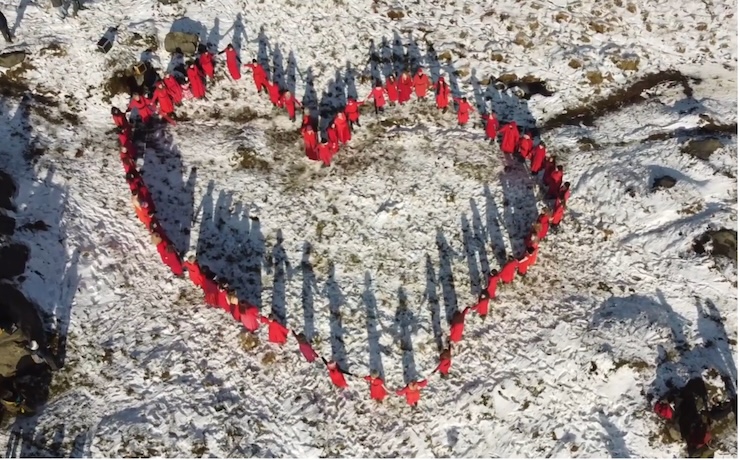
On Valentine’s Day this year, more than 50 red-clad people braved the cold and snow to gather for a mass ‘wuther’ and dance to Kate Bush at the Bridestones, in order to raise awareness of this important peat moor and promote the exciting work planned by the Bridestones Rewilded Group.
When we first covered the Bridestones Rewilded project in 2024, it had a bold ambition: to make this moorland the first community-owned space of its kind in the county. That ambition has been realised. With the purchase of 114 acres of land around the Bridestones complete and the area now under community-led stewardship, the group are turning their attention towards what matters most – developing and delivering plans to see the Bridestones properly protected and restored.
The Bridestones moor is a beautiful example of peatland, an ecosystem that represents only 3% of the global land surface but is critical for carbon storage, making it crucial in the fight against climate change. Around 80% of UK peatland habitats have been degraded, with burning for grouse moor management, overgrazing and peat extraction for horticulture all playing major roles. This community-led initiative therefore carries the torch of hope in a landscape darkened by news of environmental decline and climate breakdown.
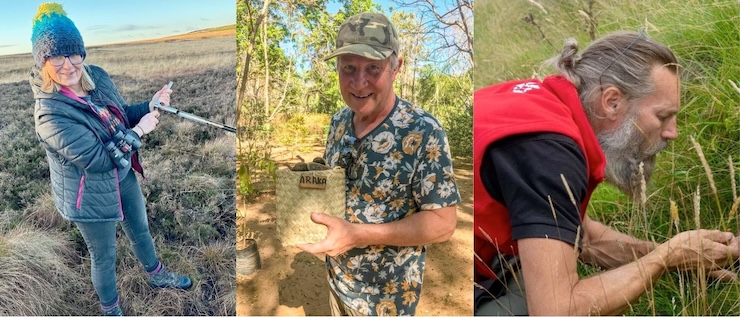
Sitting down with directors of this first-of-its-kind project, Cath Baker, Anthony Arak and Steve Hindle, I was able to get a brilliant insight into the plans for Bridestones moor.
Understanding the landscape
Since completing the purchase in October 2025, the Bridestones Rewilded team has wasted no time getting to work. Volunteers are already out on the moor surveying gullies, hags and erosion features, mapping species records, and building a detailed picture of the landscape’s habitats and hydrology. Water flow from the moors is being measured to assess flood risk. All this information is being fed into a long-term dataset that will guide restoration decisions in the coming years.
Underpinning the data collection is a purpose-built digital map that uses the Mergin app, an open-source field tool integrated with mapping software that allows volunteers to record data directly into a central database on site. It’s citizen science done properly, building the long-term evidence base necessary for effective restoration and rewilding while equipping amateur scientists and naturalists with crucial field skills.
Biodiversity Net Gain scheme
Right now, the group is focused on using the Natural England BNG scheme to raise money by selling BNG credits, in order to clear the charitable loans that made purchasing the 114 acres possible: this will free up the project to throw itself fully into the rewilding work ahead.
It’s still early days for this first-of-its-kind Calderdale initiative, yet the expertise of the group and the groundswell of local support have already driven real progress in a short time. So, while the winds may be wuthering across the Bridestones, on the moor something else is stirring. A new sun is rising on this ancient landscape, and for the first time in a long time, its warmth falls on grounds under the right stewardship.
Further information
- You can offer your support by donating or volunteering with Bridestones Rewilded here.
- Wuthering Flash Mob Descends on Bridestones Moor – Bridestones Rewilded – Valentine’s Day 2026…
[Image Credits: Bridestones Rewilding]